We had a coalition Government that although were proficient at handling the economy, failed to act on improving emission levels in our country. We now have a Labor Government who are good at rhetoric, but unwilling to do anything constructive to improve these emissions.
In these uncertain financial times it is even more important for a Government to act on behalf of the Nation, and help householders to reduce there expenses. And yet a man with an almost unpronounceable surname and a thick Austrian accent, a man who was a brash, quick talking bodybuilder from a small European village and would become one of Hollywood's biggest stars, go on to marry into the prestigious Kennedy family, amass a fortune via shrewd investments and one day be the Governor of California, had the vision to take appropriate steps to address this issue rather than spend eons talking about it.
http://kevshot.multiply.com/journal/item/63/THE_KIMBERLINA_SOLAR_THERMAL_ENERGY_PLANT_
This is the bold politics we should expect from Australian politicians, instead they want to follow the European solutions, which are not needed or appropriate for conditions in Australia and the ETS is a joke. It is based on building Government coffers while forcing electricity prices to increase so that alternatives are a attractive solution. The trouble is it is increasing costs to households, which Australian households will pay more money to make the cost of transferring to alternatives more attractive. This is a strange strategy and delaying conversion possibilities for at lease 10-15yrs.
If a Government looked at this rationally, by seriously assisting households to convert to alternatives now, by embracing new technology now, and by pushing the closure of city centre’s to general traffic between 0700 & 1900, and improving public transport measures we would have the structures in place by 2030 to have significant lowering of emissions, possibly already achieving our targets, while assisting households in their daily household budgets, saving overheads for business and making schools capable of generating funding through the on selling to the grids of excess energy generated during school holiday periods.
I would envisage a sizeable commitment by the Government initially, to assist in conversion for households, however, this could be recovered through person tax over a period of time, or recovered on sale of the house, which ever comes first.
This would be a case of a Government acting proactively to improve both the climate and saving households in ongoing expenditure. The technology is available now, we need not wait until 2030, nor do we need a ETS to tackle the problems.
I am not a greenie, nor do I believe we have caused the current cycle of weather we are in, but I do believe we need to clean up our planet, and embrace technology that has the ability to create electricity using the sunlight we are blessed with for free. So regardless of what you believe the solutions are the same and of benefit to all Australians. I have no financial interest in this matter and my only concern is for Australian households.
I have been pushing my views since July and no political party appears to be interested in what I have to say. I have had the pleasure of hearing some individuals using parts of my ideas as their own, but no-one is willing to take the horse by the reins, and present the full package. It is workable as is, but I can accept others ideas as valid also. I will present this to you without the belief anyone will actually read it let alone acknowledge it. But I will keep knocking on doors until someone listens and acts on behalf of the Australian public
http://kevshot.multiply.com/
Showing posts with label Australians. Show all posts
Showing posts with label Australians. Show all posts
Sunday, October 26, 2008

Thursday, October 23, 2008
THE KIMBERLINA SOLAR THERMAL ENERGY PLANT
Located in Bakersfield, CA, Ausra’s state‐of‐the‐art Kimberlina Solar Thermal Energy Plant is the first of its kind in North America,and proof that Ausra’s “next generation” solar thermal technology is real and that it works now. We’re ready to power our customers and provide industrial steam for businesses working to cut energy costs with pollution‐free technology.
The Kimberlina plant also represents the first solar thermal project to enter operation in California in nearly 20 years. It showcases Ausra’s technology that is already operating at the company’s Liddell solar thermal facility in New South Wales,Australia.
The rows of mirrors at Kimberlina were manufactured at Ausra’s solar thermal power factory in Las Vegas,Nevada. These solar thermal collector lines will generate up to 25 megawatts (MW) of thermal energy to drive a steam turbine at the adjacent Clean Energy Systems power plant. At full output, the Kimberlina facility will produce enough solar steam to generate 5 MW of clean, reliable electricity—enough electricity to light up 3,500 central Californian households.
In addition to Kimberlina, Ausra is developing a 177‐MW solar thermal power plant for Pacific Gas and Electric Company (PG&E) in Carrizo Plains,west of Bakersfield. Ausra will sell the full output of the plant to PG&E under a long‐term contract.
CLEAN, RELIABLE, COST‐COMPETITIVE ENERGY
Ausra’s Compact Linear Fresnel Reflector solar collectors boil water with concentrated sunshine. Mirrors track the sun, reflecting solar heat onto boiler tubes to produce steam without the costs and pollution of fossil‐fired boilers. Direct steam generation makes integration into existing systems simple, either as retrofits or new designs. The result is a system that produces steam and electricity directly from the sun, at prices that compete with peak natural gas energy resources.
AUSRA – YOUR LOW‐COST ENERGY SOLUTION
Ausra delivers energy from the sun. The company provides solar energy and energy systems for industrial processes and utility‐scale electricity generation. The company is a leader in solar thermal energy design, development and manufacturing. Ausra is committed to serving the global energy needs of customers in a dependable, market‐competitive and environmentally responsible manner. Headquartered in Palo Alto, Calif., Ausra is a privately held company with operations in the United States and Australia. To learn more about Ausra and solar thermal power, visit www.ausra.com.
THE AUSRA ADVANTAGE COST‐EFFECTIVE STEAM
Most land‐efficient solar technology Eliminates fuel and pollution cost risks; On‐peak energy delivery
RELIABLE AND ROBUST
Commercially proven technology; Low wind profile; Steel‐backed mirrors for long life;
Suitable for demineralized or produced water operation.
RAPID DEPLOYMENT AND INSTALLATION
High‐volume, automated production and standard materials eliminate supply chain constraints; Rapid field installation (12‐24 months)
Monday, September 15, 2008
When will we catch up ? Will it be too late?

High on the Alantejo Plain, in Eastern Portugal, the world’s biggest solar photovoltaic farm is nearing completion. When the £250 million farm is fully operational later this year, it will be twice as large as any project of its kind in the world. It is expected to supply 45MW of electricity every year, enough to power 30,000 homes.
The farm, located in an area with the highest annual sunshine per square meter in Europe, is made up of 2520 giant solar panels, positioned at a 45 degrees angle, to track the sun through 240 degrees every day. Portugal, with no oil, coal or gas reserves and no expertise in nuclear power, has some of the most ambitious targets for renewables in Europe, and aims to become a leader in the European clean-tech revolution. According to economics minister Manuel Pinho, “We have to reduce our dependence on oil and gas. What seemed extravagant in 2004 when we decided to go for renewables now seems to have been a very good decision.” By 2020, he expects Portugal to generate 31% of its energy from renewables.
The rate of progress is certainly impressive. In less than three years the country has trebled hydropower capacity, quadrupled wind power and invested in flagship solar projects like the one at Mouro. Crucially, this progress has been achieved on the back of a favorable economic and political climate. The government has guaranteed price-levels for the long-term and projects are not delayed by state indecision or hold-ups in the planning system. By 2012, companies are expected to invest £10 billion ($20 billion) in renewables, rising to up to £100 billion ($200 billion) by 2020.
While this project is to be of record-holding size, it will be overshadowed eventually by a plant in the US currently in the planning stage, which is expected to produce 500MW - far more than this plant. The current largest solar farm in the US is well below Portugal's upcoming farm, sitting at 14MW. Of course, it seems as if lots of "world's largest" solar farms are in the works, so it's nice to see at least this one will be a reality.
Via The Guardian; photo credit Teri Pengilley
It seems that some countries are getting it right, and yet Australia is well behind the eight ball on renewables, while the Government thinks its priority is to tax us even more in order to make current electricity prices rise to a point where it is just as economincal to use Renewables????
Lets get this right, because we may not get a second chance. Start renewable plans, convert to solar, at least Hotwater services ( these account for up to 50% of our domestic electricity usage), and produce plans to reduce our reliance on driving our cars especially CBD's and sububan commuting.
Kev
http://www.gopetition.com.au/petitions/renewable-energy-solutions-for-australians.html
Saturday, August 30, 2008
Is the Government only paying Lip Service to Climate Change?
Our current Govt states:
‘There is no greater challenge now facing our world and our nation than dangerous climate change. Australia is on the front line to suffer the impacts of climate change as a result of our increasing water scarcity, finely balanced natural environment and our large resources and energy sector. Yet Australia also has the potential to become a world leader in the fast-growing technologies and industries that will enable economies to reduce their carbon emissions.
The cost of inaction on climate change will be much greater than the cost of taking action now. The Australian Government is committed to decisive action on climate change, to prepare Australia for the transformation of the global economy to low carbon energy sources.
The Government’s action plan on climate change includes:
. Establishing a national emissions trading market by 2010 – to enable the market to
set a price for carbon, unleash innovation and create strong market incentives to
reduce carbon emission levels.
. Implementing the Kyoto Protocol and strong support for a new global climate change
agreement to take us beyond 2012.
. Establishing a national emissions trading scheme by 2010.
. Investing in low carbon technologies such as clean coal and renewables.
. Setting a 20 per cent target for renewable energy by 2020 to dramatically expand
the use of renewable energy sources such as solar and wind.
. Implementing a $200 million Great Barrier Reef Rescue Plan to help secure the Reef
from the serious threat posed by climate change and declining water quality.
20% renewable energy target
Reducing greenhouse gas emissions is one of the major challenges in tackling climate change. The Government is implementing a 20 per cent Renewable Energy Target for Australia to reach by 2020 – so that by 2020 renewable energy sources will produce enough energy to meet the energy needs of all Australian households. This will help fast-track the development of new renewable technologies, such as solar, wind and geothermal energy, also known as hot dry rock technology, and help to achieve overall emission reductions at lower cost. ‘
http://www.pm.gov.au/topics/climate.cfm
If The House of Representatives is one of the two houses of the Australian Federal Parliament, the other being the Senate. It is sometimes called the 'people's house' or the 'house of government'. And one of its functions is it ‘Represents the people—Members may present petitions from citizens and raise citizens' concerns and grievances in debate. Members also raise issues of concern with Ministers and government departments.’
Then what are they doing? It is evident they recognize the benefits of Renewable Energy technologies and the fact they will achieve overall emission reductions at a lower cost, and yet they aim for implementing a 20% Renewable Energy Target by 2020. This is a classic case of ‘too little, too late’.
They should be aiming at an 80% Renewable Energy Target by 2020, and start implementing NOW. This, as the Government so rightly states will reduce emissions at a lower cost. It has number of ongoing effects i.e. these sensible approaches will assist schools to produce part of their own funding through electricity generation and on-selling, during school holidays.
When are they going to see the light, this idea is unworkable, and unpopular. They need to work on plans to actively address the issue, rather than boost their tax revenues.
The Means Test was such a backward step for the Solar Energy debate, it is unbelievable that anyone could even have thought of it, let alone suggested and implemented it. You need incentives for people that have the money to install these Solar systems, because if these people take up the incentives then the price of these Solar systems come down, which in turn become more affordable to people in the lower income bracket to be able to purchase them, (it's a no-brainer isn't it). Therefore the Senate Committee should recommend abolish the Means Test.
Fighting against and reducing Carbon Emissions is in fact the easy part, the real challenge is in finding enough politicians that care enough about the issue and their constituents to tackle this issue head-on. We need politicians, that are willing to take the radical solutions onboard and realise it is worth the expense to have people convert their lifestyles and homes and embrace alternate renewable energy resources, and vehicles with 'Greener' emissions.
A concerted Government effort to assist business to convert their energy resources to Solar would be further improving the situation and end up saving business costs in the long term. Schools could be big winners through solar conversion, as besides a saving in general terms, during holiday periods they would have the opportunity to make money by allowing the electric suppliers to buy back electricity the generate and are not using during this period.
And of course the conversion of all residential properties to solar energy as mentioned in my previous Blog has enormous effect on Carbon Emission reduction and offset.
The Carbon Emissions Trading Scheme, which the Rudd Government are presently opting for, due to debatable success in Europe, is a poor choice for Australia, and our unique conditions, and will not really address our problems. The Government is floundering yet again their ‘Grand Design’, as it is not a viable solution in Australia.
See http://www.theaustralian.news.com.au/story/0,,24264595-2702,00.html
The Government should also encourage people to purchase electric bikes and scooters, without a need for license and registration for vehicles up to 500w or 750w motors. (The key consideration will be safety measures such as helmet, or even knee and elbow pads as currently exist) Once again it will reduce emissions, and will force the petrol companies to reduce petrol prices due to the reduction in demand. This will then have an ongoing effect with other supplies such as food etc due to reduced petrol costs.Further emission savings could be achieved with discount in registration costs for vehicles using cleaner solutions such as Electric, LPG or Diesel. Although the Government will need to ensure some form of regulation to keep the sale price of these fuels steady, at least initially. This will result in an increase in greener vehicles being sold as they will be far more attractive in terms of their ongoing costs.
A matter for serious consideration should be closing our city centers to general traffic, by closing the city between 8.00 - 7.00 to private vehicles and introducing a congestion charge with a time restriction on heavy vehicle traffic and deliveries, this will reduce the congestion in the city, and alleviate the carbon emissions produced by vehicles that can only travel at a snails pace there anyway. This would allow city workers to use the current public transport arrangements, bicycles, e-bikes, scooters, and even roller blades safely, leading to not only reduced carbon emissions, but would show an improvement in the health and fitness of many of these workers.They will need to spend to upgrade our public transport also, and teach drivers of buses to drive more economically also., they could actually allow people in the city to use electric bikes and scooters safely, bicycles, scooters and even roller blades safely, and make walking around the city easier to accomplish and less hazardous, which can increase the health and fitness of these workers while reducing Carbon emissions at the same time. Delivery vehicles could be limited to times outside of 8.00 to 7.00.
A Personal rapid transit (PRT) system, also called personal automated transport (PAT) or podcar, is a public transportation concept that offers on-demand non-stop transportation, using small, independent vehicles on a network of specially-built guide-ways. Several different designs have been proposed, and as of 2008, at least one is under construction. This ideally could be utilized to travel around the city initially, and then expanding the network to other areas. Another option would be to expand the current Sydney Monorail and Metro Light Rail to encompass the CBD.
As we have a train link to the airport, the issue of people needing taxis to the airport is already addressed and by upgrading public transport facilities, will be better accepted and utilized.
These ideas would be an easy sell on the electorate, they are a sign of Australia’s ‘coming of age’ to the International Community on the proactive approach to Climate Change, and a radical change in the political scene by showing Government’s don’t just feel our pain, but are willing to address the cause of our problems, and take action to implement the necessary changes, with the aim to improve the quality of life of all Australians and this wonderful country.
A Government with a strong leader in place, who is willing to show they are focused on Australia, and the electorate, rather than their own political future, could bring forward these changes and ensure policies, that are against the electorates’ needs or desires and are fundamentally flawed are not introduced.
It only requires politicians willing to accept they may upset a few big businesses, (although the abolishment of the Emissions Trading Scheme, will appease a lot of these) for the benefit of all Australians, and show a willingness to make and change some existing legislation, policies and plans, to address these important needs, and we as Australians will be showing the world not just ‘the way of the future’, but also 'the way forward'
Kevin
Monday, August 25, 2008
Time to raise the ante
So here I am 6 weeks after starting a campaign to get politicians onboard in an attempt to help all Aussies, and what has been achieved.
I have had two politicians respond showing they are of the same thinking, and that is all. None of the Major players have bothered to respond regarding these issues, of course I expected this as at present neither party is willing to look after Australia and Australians, and forget about the reduction in taxes in the short term.
However, although no response, it is noted since distributing these ideas a number of politicians have been coming out with very similar views of their own, although selectively chosen.
So this would appear to show the message is getting out after all, if only more people would get behind these views we could put a much greater pressure on to convince them, there is another way, and in showing they truly care about improving Australia and Australian households they are ensuring their place in an Australian Government for a long time to come.
The fight is on people are not prepared to sit back and wait until politicians start getting it right, we are insisting they start listening, and stop dallying with our future. While they are looking overseas for answers, they are not addressing OUR needs. We had the 2020 summit, where the Government ignored many good ideas and only adopted ones they could twist to their advantage. This is the reason we need to apply strong pressure otherwise we will be at 2020 with less money in our pocket, and still deciding what to do about renewable energy solutions.
A number of submissions were made with similar views to mine, and yet these were discarded as the emphasis of these ideas was on giving back to Australians in order to resolve environmental issues, rather than finding ideas to raise taxes. Having read the 2020 Summit report, it was as most of us knew an exercise in public perception rather than a gathering of realistic ideas, the Government would consider.
In the next week I will develop a petition which I hope to gather enough signatures online to continue in changing politician’s ideas and forcing them to act for the Australian public rather than their political party futures
Any feedback greatly appreciated and ideas for the petition gratefully received.
Kevin
Friday, August 1, 2008
There is a Solution - Is there a Hero?
No 'magic wand' on grocery prices
This headline in the news today, show a need for a leader with the courage to put an effective alternative policy forward that will lead Australia forward, provide relief to households, and address the emission levels at the same time. I feel this leader will gather unprecedented support, and if this leader has the economic nous to put this plan into action and ensure it is adopted on a unequivocal basis then this person would no doubt hold the support of the electorate for a long time to come.
The Carbon Emissions Trading Scheme, which the Rudd Government are presently opting for, is a poor choice for Australia and will not address our problems.
This headline is not necessarily true as some of the reasons for climbing grocery prices can be addressed via my plan for a solar solution and the options for alternate fuels that will drive down prices, solar power on businesses reducing overheads and possibly the Government putting in place a watchdog, with appropriate teeth in place to ensure these savings are passed on to consumers.
It would be an easy sell on the electorate, a sign of Australia's 'coming of age' to the International Community on the Climate Change debate, and a change in the political scene to showing Government's don't just feel our pain, but are willing to address the cause of our problems, and take action to implement the necessary changes.
I urge politicians to seriously look at this alternative below, they could easily poll the electorate to view their reaction to it, but this is the only 'real' alternative policy. It will allow a Government with a strong leader in place, to show they are focused on Australia, and the electorate, rather than their own political future.
Kevin
Sunday, July 27, 2008
Emission Trading Scheme is not a Solution
"The Earth’s temperature is determined by balance of incoming solar radiation (“insolation”) energy and outgoing terrestrial infrared radiant energy emitted by the planetary surface and atmosphere.
As far as policy is concerned, what matters is not so much the costs to Australia of higher average global surface temperatures, but the costs and benefits of various policy actions which are aimed at addressing the possible undesirable effects on Australia of higher average global surface temperatures.1 This is a subtle but important distinction. Any policy contemplated by the Australian government should be focused on the net benefits to Australia of that particular policy.
Only a full economic cost-benefit analysis of emissions reductions versus alternative policies can shed light on these issues for Australia. No credible economist (or anyone else, for that matter) has demonstrated that there are significantly positive total benefits (let alone significantly positive marginal benefits) to Australia from the policy of reducing our CO2 emissions. There is a very good reason for this: since Australia’s emissions are so small, any benefits (both in total and at the margin) of emissions reductions are likely to be extremely small – almost certainly zero. The report therefore constitutes a solution in search of a problem. - The Shergold Report on Emissions Trading
Of course this report is being ignored by this Government who seem to have ‘a dream’ of what they will introduce. The trouble is this report has got it mostly right and in particular “Only a full economic cost-benefit analysis of emissions reductions versus alternative policies can shed light on these issues for Australia.”
This is one of my points in particular, the policy the Government is pushing in regard to Emissions Trading Scheme is not the best policy for Australia. Although a number of sources are visiting Alternatives, they are not pushing for these, why?
The answer is obvious ‘greed’ ETS will deliver the Government with a windfall, where to deliver a ‘real’ solution in assisting households to become solar efficient would not. Governments need to stop looking at the coffers and start caring about their constituents and the environment.
Although ETS is a proven scheme in Europe, we are Australia, and have better solutions available to us. What we deserve is a Government who recognizes this. All papers on Alternate sources of energy show the significance of making changes now.
Solar energy – photovoltaic (PV) panels – offer Australia’s best, most immediate, and most efficient means to provide zero emissions energy during periods of peak power use
reducing emissions, and reducing the need for new, high emissions power stations to cope with increasing demand.
In this context we want to set a clear policy direction of substantially increasing the take up of Solar PV throughout Australia.
In short, we want to set Australia on a path to being a country where everyone willing to invest is within reach of running a solar home" The Hon Greg Hunt MP stated on 28 April 2008
“The Government recognises that there will be adjustment costs for Australian
households arising from the Carbon Pollution Reduction Scheme.
The Government will cut fuel taxes on a cent for cent basis to offset the initial price impact on fuel associated with the introduction of the Carbon Pollution Reduction Scheme. The Government will periodically assess the adequacy of this measure for three years and adjust this offset accordingly. At the end of ”the three year period the Government will review this adjustment mechanism.”
“Fundamental to the Government’s climate change strategy is a Carbon Pollution
Reduction Scheme. It is the best way to reduce carbon pollution while minimising the impact on business and households.”
“There is considerable international cooperation on clean energy technology and the Government, its key research institutions and business participate in all significant initiatives. Carbon capture and storage, solar and geothermal technologies have been identified as strategic priorities for Australia. With regard to adaptation responses, Australia will be able, and expected, to assist vulnerable countries in the region adapt to unavoidable climate change. Consequences across the region will vary, with some countries being particularly exposed in relation to climate risks, such as sea level rise, while others are potentially significantly impacted by climate change responses.
Assisting the region in this way will help ameliorate potentially regional impacts and support sustainable development.”
“Several Commonwealth residential energy efficiency programs targeted to address market failures and assist households, including those on low incomes, are under development and will be implemented in 2008–09. Those programs include:
• low-interest Green Loans, to assist families install solar, water, and energy
efficient products
• the Low Emission Plan for Renters program, which subsidises the installation of
insulation in rental properties
• the expansion of the Energy Efficiency of Electrical Appliances measure, to help
families identify the most energy efficient and cost effective appliances for their homes
• the Solar Hot Water Rebate program, to encourage the domestic use of solar and heat pump hot water systems, and the Hot Water System Phase-Out to phase out inefficient hot water systems used in Australian homes
• the One Stop Green Shop, which is a single, user friendly government web portal designed to link schools, businesses and families to household efficiency programs provided by all levels of government.” The Green Paper July 2008
So the Government in a 532 page document they call the ‘Green Paper’ committed 2 paragraphs to solar energy. This is a afterthought, and pure rhetoric, not something the government intends to seriously consider. Why? I said it before and the only obvious answer is ‘greed’
They begin with acknowledging the ETS will hurt households, and suddenly will cut fuel tax on a cent per cent basis to adjust? Is this the same Government that stood up and said “ there is nothing we can do to reduce the cost of petrol” when prices went up and we were in pain, now they have discovered they can reduce fuel costs, when it suits ‘them’. Remember in my article ‘A solar Solution’ I proved they could address reducing, Carbon Emissions, Offsetting Carbon Emissions, lowering prices of petrol and other services, and easing the pressure off Australian householders in very achievable and simple solutions where we won’t be ‘hurt’.
How have G8 members done under the protocol so far?
The EU’s environment agency projects Britain and France will meet their Kyoto obligations but other G8 members are struggling:
Canada. Emissions have gone up as much as 35 percent since 1990 because of continued increases in the exploitation of the country’s oil resources, calling into question whether Canada can make its 5 percent reduction target.
Japan. The second-largest economy in the world is also in jeopardy of not making its assigned goal. Japan’s emissions have risen over 8 percent, which means the country will now have to reduce emissions more than 14 percent by 2012 to meet its Kyoto target of 6 percent.
Italy. Greenhouse gases have increased more than 12 percent above 1990 levels. Italy’s target is a 6 percent decrease by 2012.
Germany. The world’s sixth-biggest carbon dioxide emitter faces criticism from environmental advocates and the European Union for plans to build twenty-six new coal-fired power plants (Spiegel), considered one of the main sources of greenhouse-gas pollution. A German plan to exempt coal plants from Kyoto requirements adds to concerns. Although Germany has managed a 17 percent reduction in emissions (very close to its overall goal of 21 percent under the protocol), much of those reductions came from shutting down power plants in former East Germany.
Russia. Russia did not face mandatory cuts since its greenhouse-gas emissions fell well below the 1990 baseline due to a drop in economic output after the breakup of the Soviet Union. Yet Russia has approved joining the emissions-trading market. As the largest corporate emitter of greenhouse gases in the world, Russia’s electricity company stands to realize large profits from selling carbon credits to other industrialized countries. Russia’s official RIA Novosti news agency said in January 2008 the country was unlikely to exceed the 1990 levels in even the expected post-Kyoto commitment period.
Without the United States and developing countries entering into binding commitments, other Kyoto signatories may be unwilling to agree to additional international commitments, says Elliot Diringer, director of international strategies for the Pew Center on Global Climate Change. The European Union is likely forge ahead on its own to reduce its greenhouse gas emissions 20 percent by 2020. But after Bali, UN environment agency chief Achim Steiner said: “The bottom line is: there is no alternative to trying to find an agreement in which the [United States]… takes significant action” (Reuters).
As we can see, this is not a easy to fix thing globally, but what we can do is show the way by moving straight to Solar and Geo-Thermal energy and showing the rest of the world just how effective these solutions are, not going with a European solution that has worked for only two countries in the EU. We must change to the Solar Solution and become Australia - ‘The Solar Country’ now.
Kevin
Tuesday, July 22, 2008
The True Challenge
Fighting against and reducing Carbon Emissions is in fact the easy part, the real challenge is in finding politicians that care enough about the issue and their constituents to tackle this issue head-on.
We need politicians, that are willing to take the radical solutions onboard and realise it is worth the expense to help people convert their lifestyles and homes and embrace alternate renewable energy resources, and vehicles with 'Greener' emissions.
They will need to spend to upgrade our public transport also, and teach drivers of buses to drive more economically also. By Closing the city to general traffic during 9.00-5.00 and introducing a congestion charge, they could actually allow people in the city to use electric bikes and scooters safely, bicycles, scooters and even roller blades safely, and make walking around the city easier to accomplish and less hazardous, which can increase the health and fitness of these workers while reducing Carbon emissions at the same time.
Delivery vehicles could be limited to times outside of 9.00 to 5.00. As we have a train link to the airport, the issue of people needing taxis to the airport is already addressed and by upgrading transport facilities, will be better accepted.
A concerted Government effort to assist business to convert their energy resources to Solar would be further improving the situation and end up saving business costs in the long term. Schools could be big winners through solar conversion, as besides a saving in general terms, during holiday periods they would have the opportunity to make money by allowing the electric suppliers to buy back electricity the generate and are not using during this period.
Parents, local business and children would be able to travel around their local area using e-bikes, and e-scooters together with bicycles and scooters if Governments legalize e-vehicles up to 500w or 50cc without registration or licensing requirements, this is currently 200w and inefficient if taking a passenger or carrying shopping etc. The resultant lessening in demand for fuel, will force petrol suppliers to drop prices, providing savings in prices across the board.
And of course the conversion of all residential properties to solar energy as mentioned in my previous Blog has enormous effect on Carbon Emission reduction and offset.
It is all covered here, and only requires politicians willing to upset a few big businesses for the benefit of all Australians, and a willingness to make and change some existing legislation, policies and plans, to address these important needs, and we as Australians will be showing the world, 'not the way of the future' , but 'the way forward'
Kevin
Sunday, July 20, 2008
Reducing Emissions and Saving Houshold Costs
I am not totally sure I believe in Global Warming, but what I do believe, is we need to stop polluting our planet. We also need to come to grips with harnessing the woelds resources rather than harvesting them.
In that regard I am a believer in alternate power sources, and energy. Solar, Wind, Water, and Thermal are all great resources we could harness, and we need to learn to recylce our water, rather than desalinating our oceans, and capturing and recycling our storm and rain water.
Our Government in it's wisdom decided to means test rebates on Solar, which meant most that could have afforded to purchase it with the rebate no longer can, and those that could not before, still can't. Our State Government decided to plough ahead with a desalination plant, where it is not necessarily the best solution to possible drought in Sydney region, and of course it was a overreaction at the time. Why plunder water from one resource when we are still wasting our other used water rather than recycling it?
The Government also feel they can do nothing to affect petrol prices, which is at best blinkered. They should be encouraging Australians to move away from petrol, and towards electric, hybrid, LPG and diesel vehicles all of which are much cleaner and greener vehicles and would through lack of demand force petrol suppliers to lower their prices, this in turn will affect prices of food, clothing etc, due to a decrease in transport costs.
The Government can encourage us by discounting registration costs for these vehicles, and allowing electric scooters, e-bikes, etc up to 500w or 50cc to be free of registration and licencing requirements, and subject to the same rules as bicycles.
Again this will mean a reduction in the amount of more local trips by petrol vehicles and save in Carbon Emissions, and lessen demand for petrol, a twofold effect.
We need to close the City to traffic during business hours, and have a time limited delivery and heavy transport access outside of business hours. This will mean a reduction in the heavy carbon emissions in the city, and will allow city workers safew walking, uses of bicycles, e-bikes, scooters, and roller blades to get around, and of course there is the existing public transport still in existence. This would have the additional effect of increasing the health and fitness of workers in the city, which is known to translate into more productive workers.
I cover the Solar energy debate in my Blog:- 'Solar Energy - The Solution to Carbon Emissions'
This is a effective way of 'doing something' which will provide extensive Australian Carbon Emission reduction in a short period of time, will work towards offsetting the effects of existing Emissions, and will help household budgets through reductions in the essential living costs.
The technology for all I mention presently exists, although Solar Conversion is expensive. The Government can assist all households to convert by providing no interest loans for conversion, which can be repayed through the familiy or individuals income tax, or upon sale of their home whichever is the sooner. However, the Government needs to make these loans available to all in order to encourage all households to convert, and of course those on higher incomes will be repaying far sooner under this idea.
Solar energy conversion for all schools is particularly beneficial in saving costs, and allowing schools to make money during the holiday by the electric suppliers buying back the electricity produced during this period.
Thursday, July 17, 2008
Solar Energy – The Solution to Carbon Emissions
I am of the opinion Carbon Emission reduction through the promotion of solar energy, will be far greater than anything the Government is currently planning, and will assist Australian households in not only becoming greener, but in easing the financial pressures on these families. With Government schools, Public Service buildings, factories etc similarly converted the cost saving can be astounding to both the environment and to the schools and organizations themselves. And all this without the need for an Emission Trading Scheme which is due to increase the cost across the board of food, petrol and other items we have come to regard as essential.
I believe the use of solar energy is a far simpler solution to reducing Carbon Emissions, which will reduce emissions far sooner than any Emission Trading Scheme could, as it is aimed at reducing the emissions emitted, and will show a repayment in financial terms to Australians for their efforts in ‘Greening Australia’. It seems the Government is intent on following the European Union lead rather than approach this problem in a way that suits Australian conditions
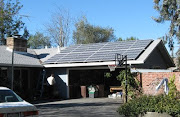
To start, the Government will need to provide rebates and subsidies which are aimed at assisting all homeowners to convert their homes to solar energy. Through Government assistance at this early stage, we can generate up to 70% of the power required to run our homes without using the present carbon intensive measures. The current cost of converting your homes energy to solar is not affordable for most and can cost between $20,000 to $30,000 and possibly more dependent on the size of the home and your energy needs. People do not own their home long enough to see the return on this type of outlay as the likely energy payback of a typical domestic sized rooftop grid connected solar conversion is approximately four years, so government assistance will be required.
Part of our surplus budget funds can be used for this purpose through non-interest loans available to all and could be repaid through individual tax increases over an agreed period of time, or recouped on the sale of the home, whichever is the sooner
As a bonus to the above we would be implementing measures that will reduce costs in households for essential supplies. The Solar energy system is reported to result in a offset of approximately 105,203kgs of CO2 over a 30 year period from one residential house. If these figures are even close the reduction in CO2 is staggering and with up to a 70% reduction in your electrical bill, this is great for the environment and friendly to the family budget. As coal-fired electricity generating stations are said to be producing up to 50% of Australia’s Carbon Emissions at present a reduction in demand of up to 70% per household will reduce the amount of emissions at this source. (http://www.solarcity.com/tabid/281/Default.aspx ) (http://www.urbanecology.org.au/topics/solarpanels.html)
Secondly the Government should encourage people to purchase electric bikes and scooters, without a need for license and registration for vehicles up to 500w or 50cc motors. This will assist in reducing emissions, and will force the petrol companies to reduce petrol prices due to the reduction in demand. This will then have a ongoing effect with other supplies such as food etc due to reduced petrol costs etc.
Further emission savings could be achieved with discount in registration costs for vehicles using cleaner solutions such as Electric, LPG or Diesel. Although the Government will need to ensure some form of regulation to keep the sale price of these fuels steady, at least initially. This will result in an increase in greener vehicles being sold. Tesla now have released a vehicle that runs solely using Electric power, it will go from 0 – 100kmh in 4 seconds and can travel at 200kmh. It will do 350kms in a charge that is equivalent to 250 mpg (US) = 0.9408583 liters/100 km. So the technology has arrived and is only a matter of time before it will be available at a price for we all can afford.
A matter for serious consideration should be closing our city centers to general traffic, and the introduction of a congestion tax, with a time of day restriction on heavy vehicle traffic and deliveries, this will reduce the congestion in the city, and alleviate the carbon emissions produced by vehicles that can only travel at a snails pace there anyway. This would mean city workers would use the current public transport arrangements, or be able to use bicycles, e-bikes, scooters, and even roller blades safely, leading to not only reduced carbon emissions, but would show an improvement in the health and fitness of many of these workers. The increase in demand on public transport would mean the Infrastructure fund would need to upgrade these facilities.
Of course I have not even broached other approaches that could well be used in conjunction with these measure such as wind power, but that was as a result of our ability to use global warming, with increased sunlight to our advantage rather then be the victims of it, where wind would be better used as a back up to solar power.
These ideas are based on the use of existing technology, the ability to implement these measures fairly immediately and with an eye on the larger picture for Australians in general. This system is workable and good for the environment, for families, and our future. If enough people become as convinced as me, we may just be able to pitch this at the politicians and set them thinking about solutions that can benefit us all.
Kevin
Subscribe to:
Posts (Atom)







 Posts

